The Japanese martial ways are organized in two divisions, the Gendai-budō (modern budō) and the Ko-budō (ancient budō). The styles or methods founded after the Meiji Restoration, in the year 1868, are considered «Gendai-budō», however it is impossible to provide a precise definition. Some folks use the date of 1876, when the act prohibiting the wearing of swords was promulgated. As for the term «Ko-budō», it is just a modern way of referring to the classical martial arts of Japan known as Koryū Bujutsu (“classical martial arts”, “old flow martial arts” or “old school martial arts”), however it is important to note that, in essence, the terms Budō and Bujutsu present differences. Furthermore, Koryū Bujutsu is the foundation of almost all modern Japanese Budō. Other articles of interest can be found here!

-
AIKIBUJUTSU 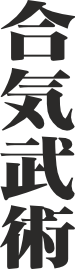
Aikibujutsu (合気武術) is a martial art that focuses on the fitting energy (合気) with an opponent's power and redirecting or canceling it, usually in a harmonious way. Bujutsu is the general denomination used by the Samurai for the different forms of combat used on the battlefield. So, Aikibujutsu literally means "fitting energy martial art or techniques". Furthermore, Aikibujutsu preserves the traditional aspects of the old Bujutsu and is composed of the following disciplines: Aikijūjutsu (fitting energy of gentle art), the Tanbōjutsu (short stick art), the Tantōjutsu (knife art) and the Kenjutsu (sword art).
Meanings
• Ai (合): fitting, combining or joining.
• Ki (気): energy, spirit or mind.
• Bu (武): military or warrior.
• Jutsu (術): art or techiniques.
>> technical program -
JUJUTSU 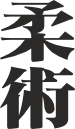
Jūjutsu (柔術) is a martial art developed by the Samurai from the old Japan. It literally means "gentle, flexible or soft art", which refers to a method of close-combat unarmed or with the use of minor weapons. This art is also known by other names such as Yawara, Taijutsu, Wajutsu, etc.. It gathers the technical groups of atemi (attack/striking techniques) and uke-waza (defence techniques), nage-waza (throws techniques), kansetsu-waza (joint locks techniques), shime-waza (choke techniques) and osae-waza (immobilization techniques).
Meanings
• Jū (柔): gentle, flexible or soft.
• Jutsu (術): technique or art.
>> technical program -
KEMPO 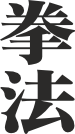
Kempō is the Japanese reading for the Chinese characters of Ch'uan Fa (拳法), which literally means "first law or method". The ancient Ch'uan Fa, introduced into Japan mainly through the spread of Buddhism, was modified and combined with Japanese jūjutsu, adapting to Japanese fighting needs. Japanese Kempō combines the atemi-waza (striking techniques) of the ancient Chinese Ch'uan Fa (first law) or Ch'uan Shu (fist art) with Japanese grappling fighting techniques (jūjutsu).
Nowadays, a competition system has been developed for Kempō divided into different competition categories, but preserving some traditional aspects.
Meanings
• Ken (拳): fist. Note that when the character "ken" is combined with "pō", the reading of the character becomes "kem".
• Hō or Pō (法): law or method.
>> technical program -
TAIJUTSU 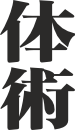
Taijutsu (体術) is a martial art developed by the Samurai from the old Japan. It literally means "body technique, skill or art", which refers to a combat skill or technique applied with empty-hand or even with "minor weapons". This art is also known by other names such as Jūjutsu which literally means "gentle, flexible or soft art". It gathers the technical groups of atemi (attack/striking techniques) and uke-waza (defence techniques), nage-waza (throws techniques), kansetsu-waza (joint locks techniques), shime-waza (choke techniques) and osae-waza (immobilization techniques).
Meanings
The term Taijutsu, on the other hand, is also used to designate, in general, close-combat methods combined with specific methods of empty-hand strikes, which is the case of Yobukan Taijutsu that is a combination of traditional Jūjutsu together with Kempō. This combination, nowadays, proves to be highly efficient.
• Tai (体): body.
• Jutsu (術): technique or art.
>> technical program